
Asphalt Repair Process — From Assessment to Open-to-Traffic
Every asphalt repair starts with an honest assessment of what failed and why. Repairing the symptom without addressing the cause guarantees a callback.
Assessment — Identify the Failure Mode
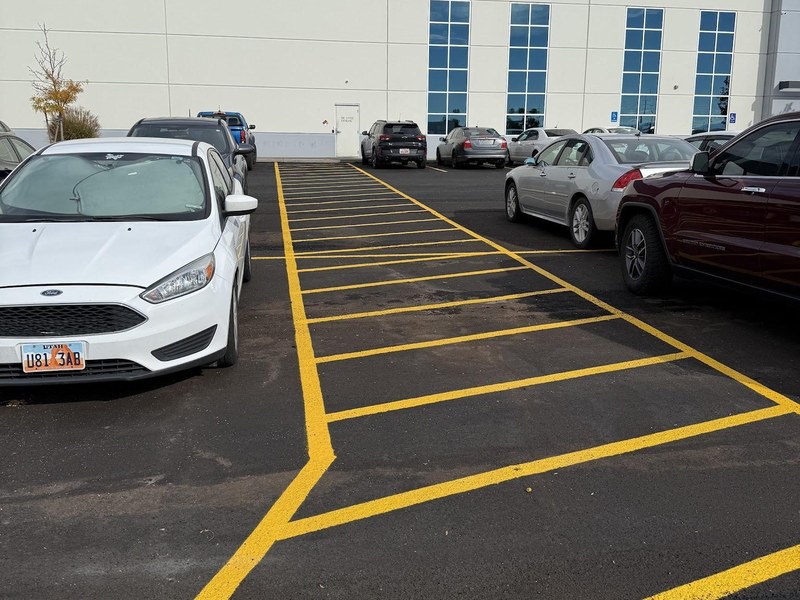
We walk the lot and probe suspect areas. Sound asphalt is dense underfoot; base-failed asphalt flexes or feels spongy. We probe cracks for depth and look for efflorescence (white mineral deposits) that indicates water migration through the base. The failure mode determines the repair method—surface cracking alone calls for crack seal; pothole formation with a solid base calls for full-depth patch; alligator cracking over a failed base calls for reclamation.
Scope and Material Selection
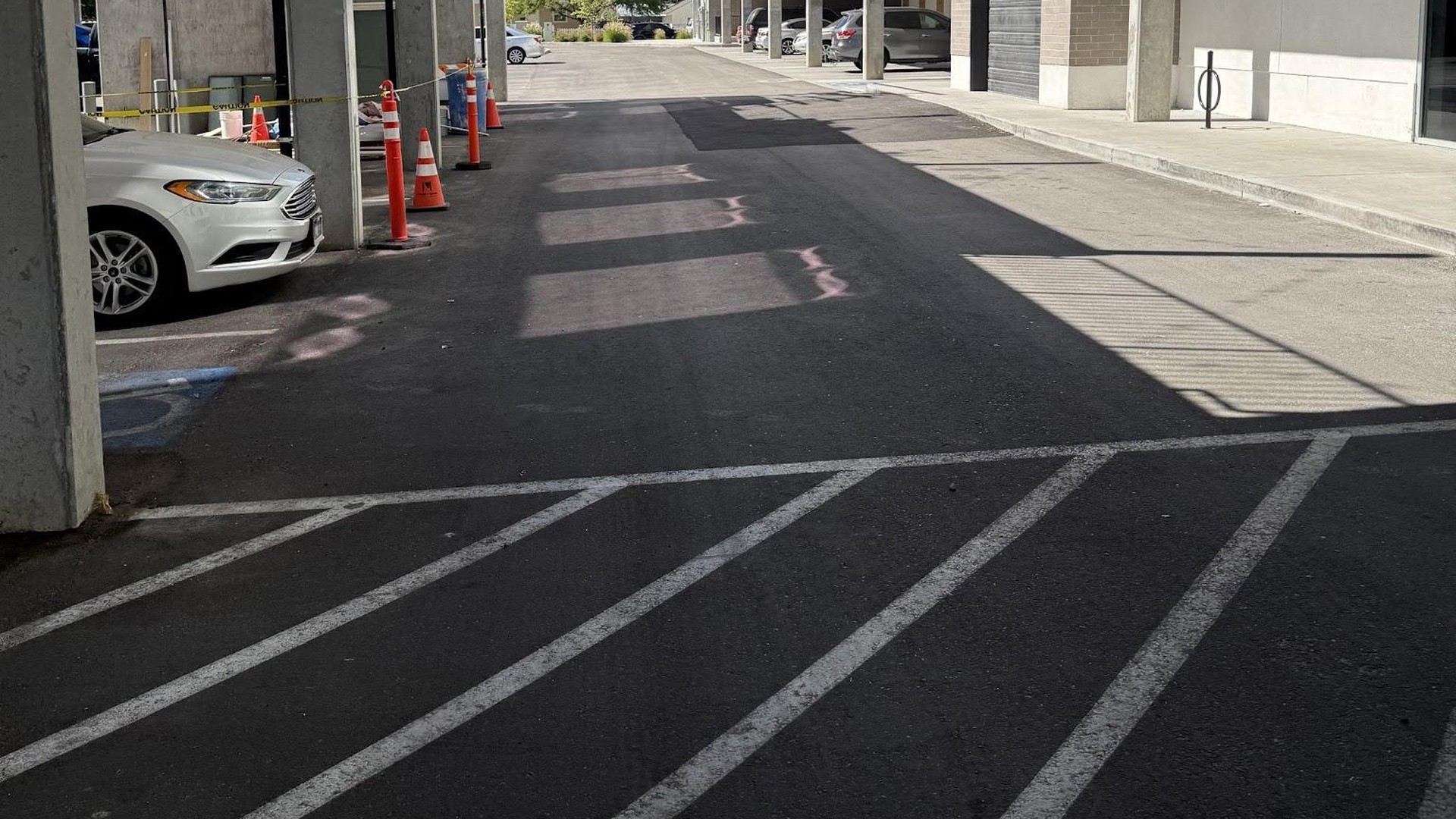
After assessment we define the repair area with paint or chalk and calculate tonnage for your approval. Utah UDOT-approved Type SP (12.5mm) surface mix is our standard for parking lot patches. For high-traffic drive aisles we step up to Type II (19mm) base mix under a Type SP cap for better load distribution. All hot-mix is sourced from a licensed Utah asphalt plant—we specify mix design, aggregate gradation, and binder content appropriate to the application.
Execution — Saw-Cut, Remove, Prep, Fill
We saw-cut the repair boundary to a clean vertical edge—no feathered or tapered edges that will delaminate under traffic load. The failed asphalt and base are removed to solid material, typically 6 to 8 inches deep. Sub-base is compacted with a plate compactor or jumping jack. All vertical saw-cut walls and the sub-base surface are tack-coated with SS-1h emulsified asphalt to promote adhesion. Hot-mix is placed in lifts no greater than 3 inches, compacted to 95 percent density with a vibratory roller or plate compactor.
Finish and Quality Check
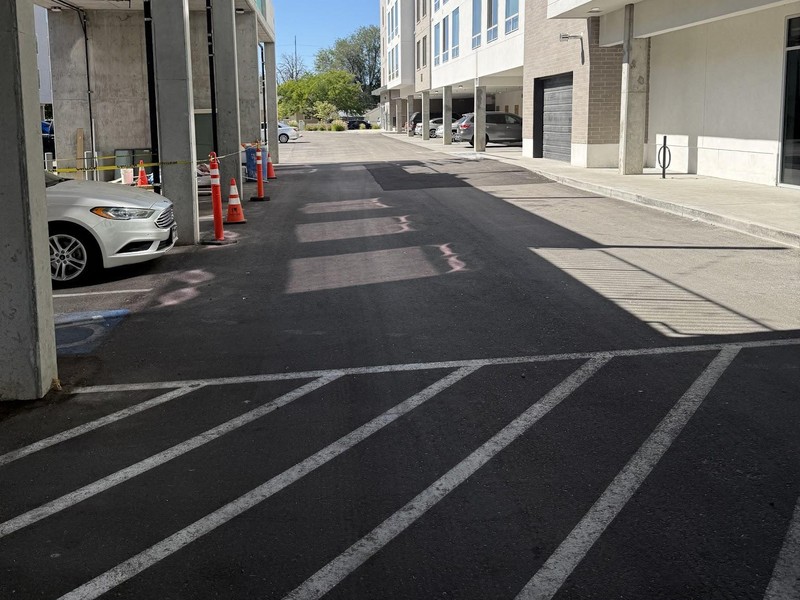
The finished patch surface should be flush with or very slightly proud of the surrounding asphalt to account for post-compaction settlement. We check the repair with a straightedge and correct any birdbath (ponding) areas before leaving the site. Cone and tape mark fresh patches during the 45-to-90-minute cooling window. We photograph before and after each repair for your property records.
Recent Asphalt Repairs Projects
Common Questions
- Why saw-cut instead of just removing the loose material?
- Irregular, feathered edges delaminate under traffic load—truck tires create a peeling force at any edge that is not vertical and bonded. A clean saw-cut edge transfers load cleanly into the existing pavement and extends patch life significantly.
- Do you compact the sub-base before filling?
- Always. Sub-base compaction is non-negotiable. Uncompacted base under a hot-mix patch will settle, creating a depression that collects water and accelerates base re-failure.
- What temperature is too cold to pave?
- In Utah, hot-mix asphalt should not be placed when ambient temperature is below 40°F and falling. We monitor forecasts and will reschedule paving if conditions drop below threshold—cold-weather paving that fails is not a service we offer.
Ready to Get Started?
Get a free, itemized estimate for your commercial asphalt repairs project. We typically schedule site visits within 48 hours and deliver written quotes the next business day.
Get In Touch
Ready for a quote or have a question? We’re Utah-based, Utah-run, and we’ll come out to your property for a free on-site estimate.
Get A Free Quote